Pickleball open play, and every doubles game on a court
4pgno puts a group of pickleball players on courts, round after round, and shows each of them, on their own phone, which court to go to and who they are playing with. The same works for tennis doubles, padel, badminton doubles, cornhole, bocce and shuffleboard.
Free, with no ads, ever.
- Assignment of players in each game is based on who is present and available to play. A late arrival is put on a court as soon as a spot opens, and anyone taking a break is left out until they are back.
- No repeat partners. Every round is calculated to keep anyone from playing with the same partner twice in one day.
- A printed lineup. When everyone has committed, the rounds are planned ahead and printed, with an index where each player finds their name.
Court assignment based on who is present and available
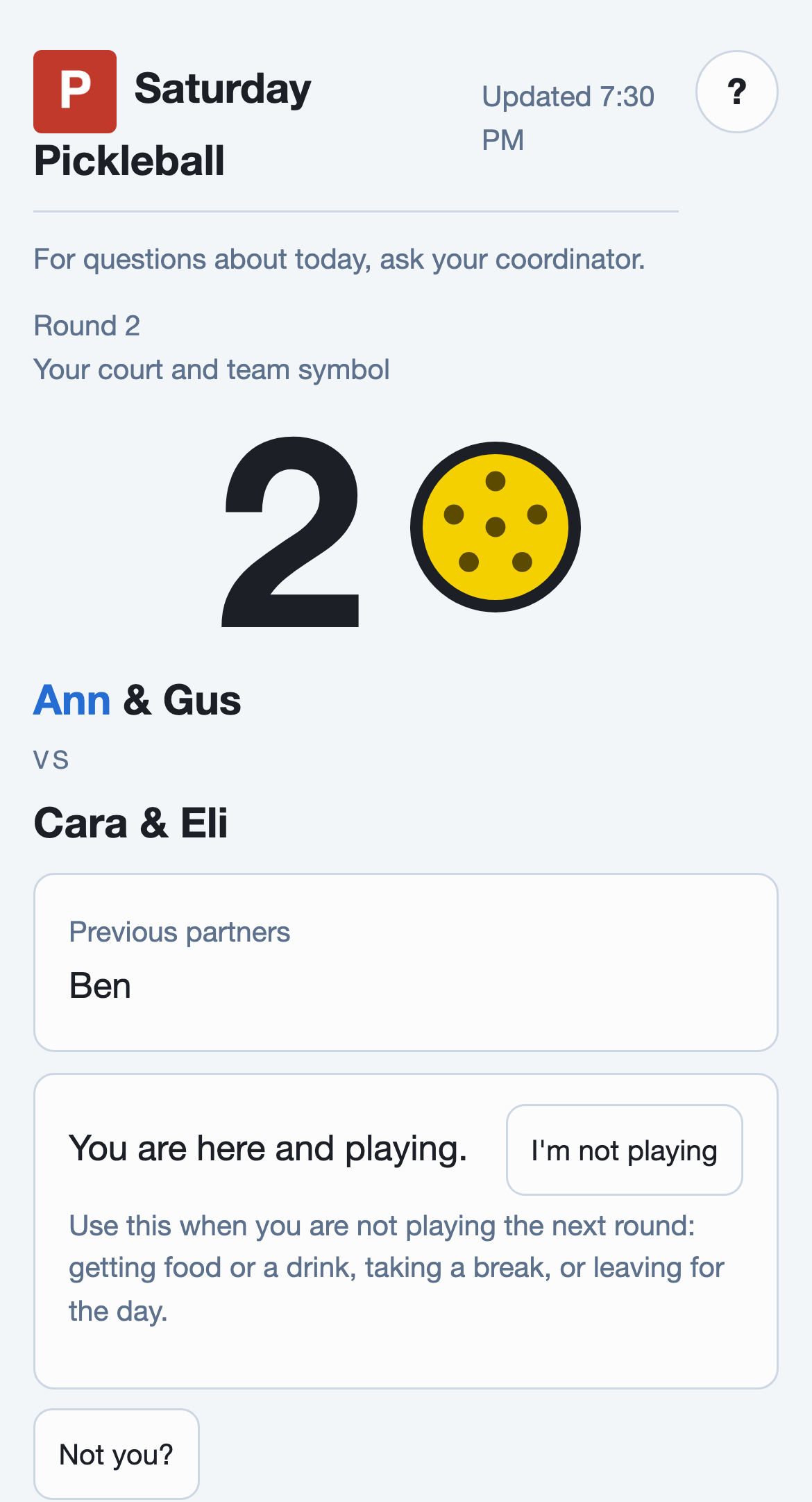
Open play means people come and go, and no one has to sign up ahead. The first player to check in opens round 1, and each later round's lineup is made when the coordinator starts it, from whoever is there and playing.
Someone who arrives during a round is put on a court at once if one has a spot open, or on one not yet in use once four are waiting, but otherwise will play in the next round. Someone taking a break or leaving for the day taps "I'm not playing" on their phone and is left out until they tap "I'm back", then plays from the next round.
Four play on each court. When there is no court of four for everyone, because the number of people is not a multiple of four or every court is full, some players wait for the next round. Who plays:
- Fewer than four who are not pinned waiting: whoever has played the fewest games plays first, then whoever waited last round, then whoever arrived first.
- Four or more: when possible, nobody has played more than one game more than anyone else, and the site limits how many rounds in a row anyone waits or plays.
No repeat partners
No one has the same partner twice in one day, and the site also avoids putting anyone on a court with the same people again. A long enough day can make a repeat unavoidable; the coordinator's page shows a note when that happens.
A printed lineup, planned ahead
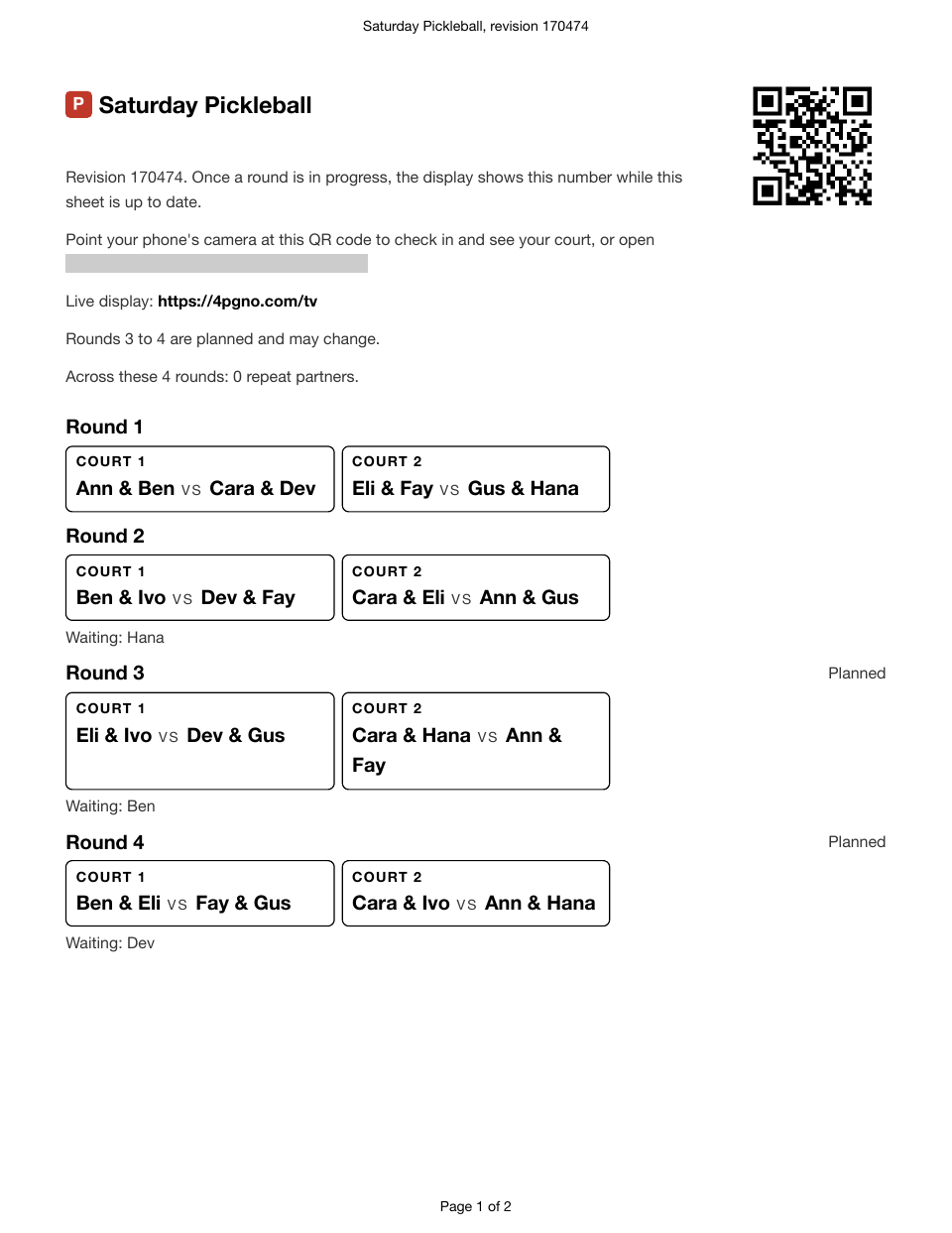
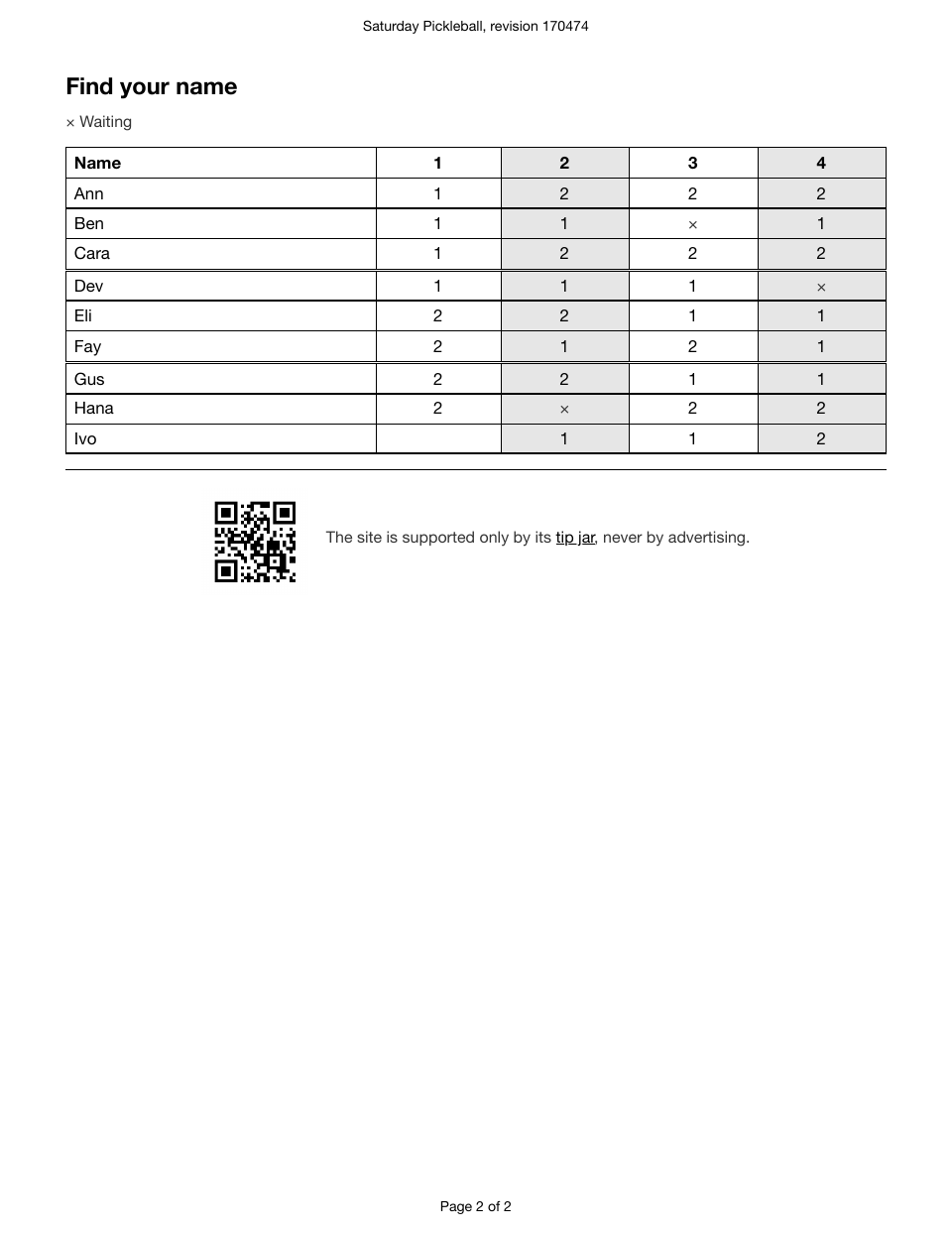
For a day when everyone has committed to being there from the start, the coordinator enters the names, plans the rounds and prints the lineup before anyone arrives: each round's courts, who waits, and an index where each player finds their court in every round.
Round 1 then starts when the coordinator starts it, not at the first check-in. If the people present change, the remaining rounds are made again from whoever is there.
The courts on a screen
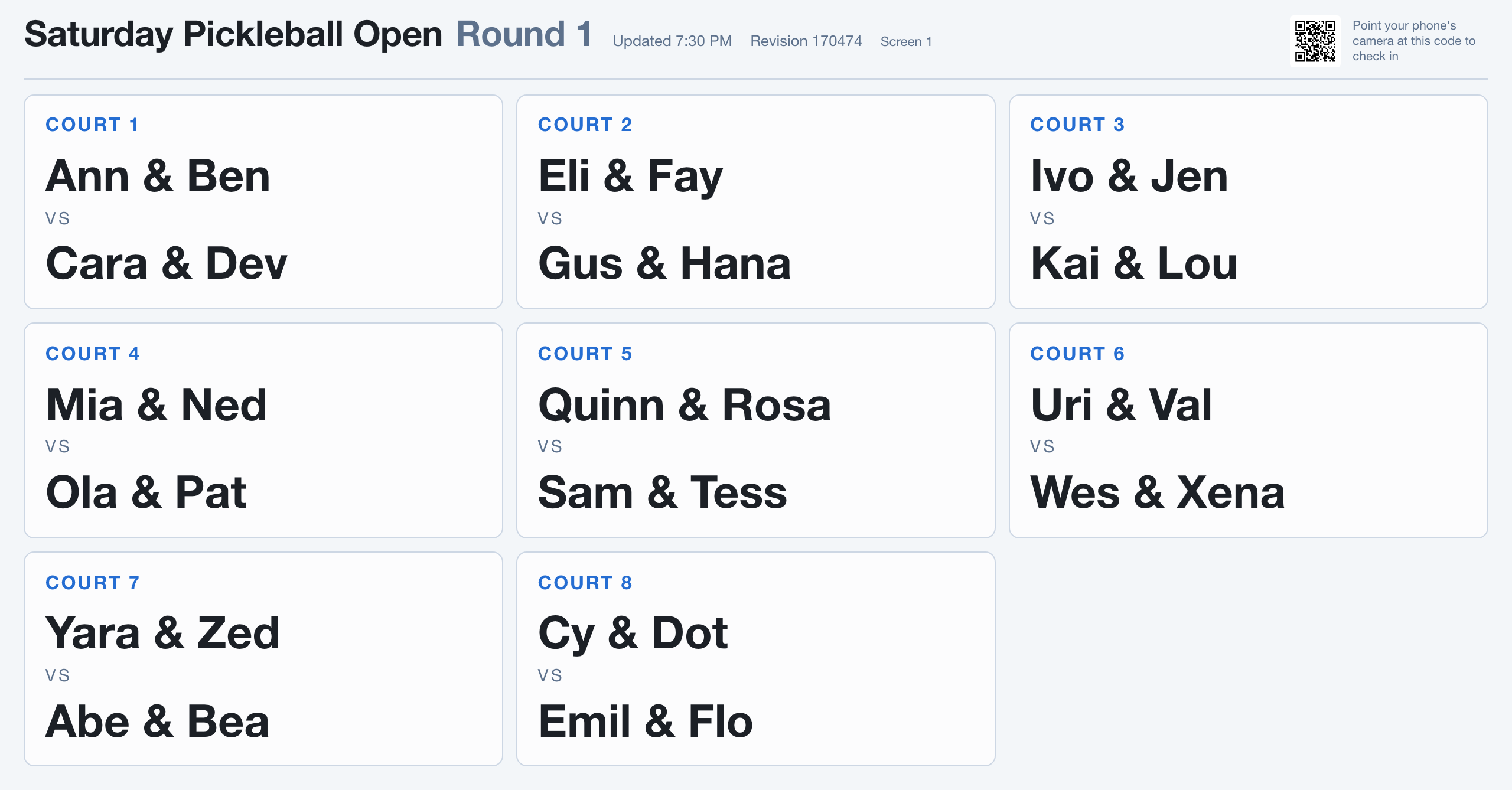
A television or any big screen can show every court in the round in progress, large enough to read from the benches.
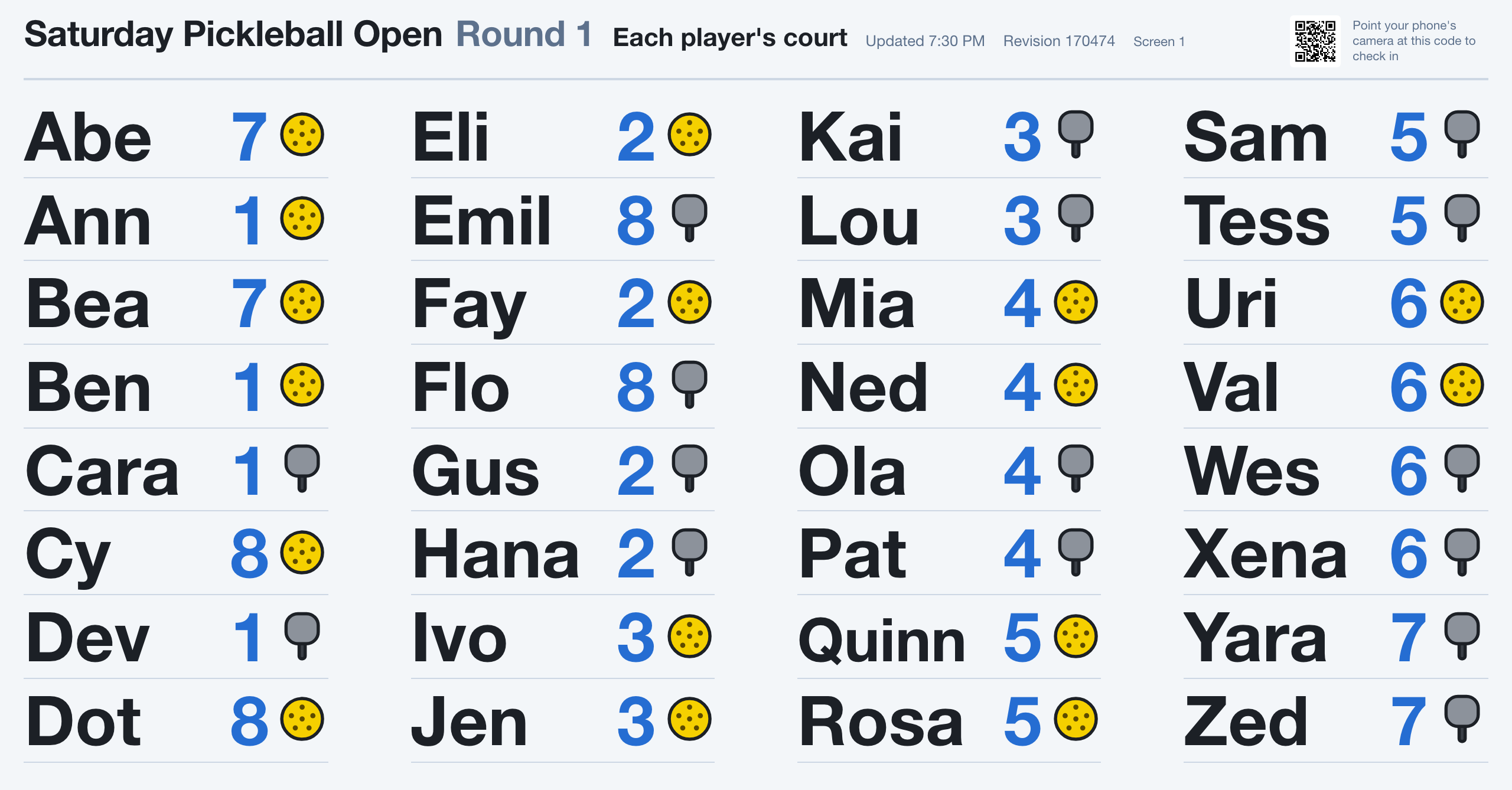
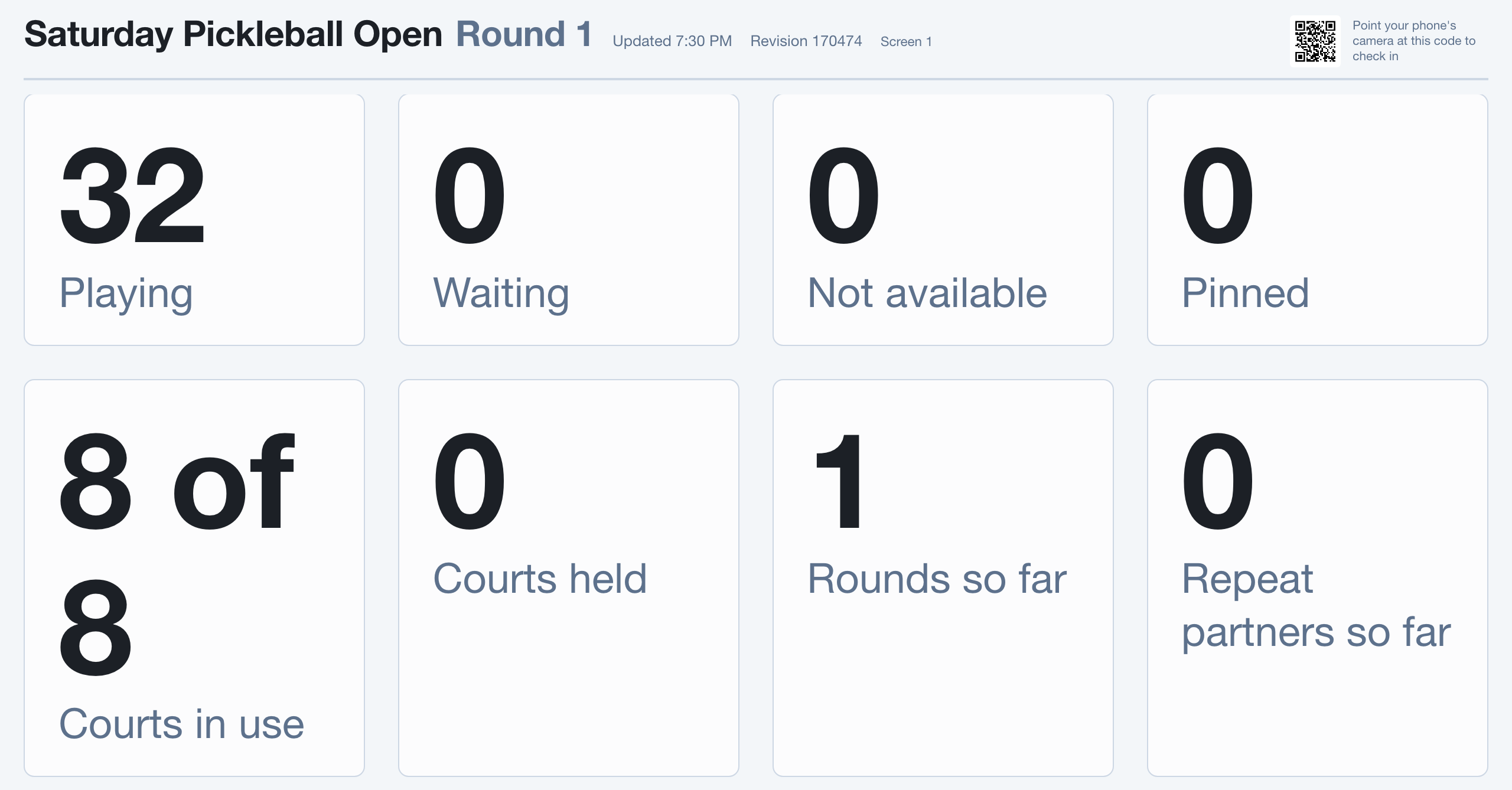
Pinning a player to a court, names entered ahead and everything else are described in How 4pgno works.
Questions or ideas about the site: info@4pgno.com.